
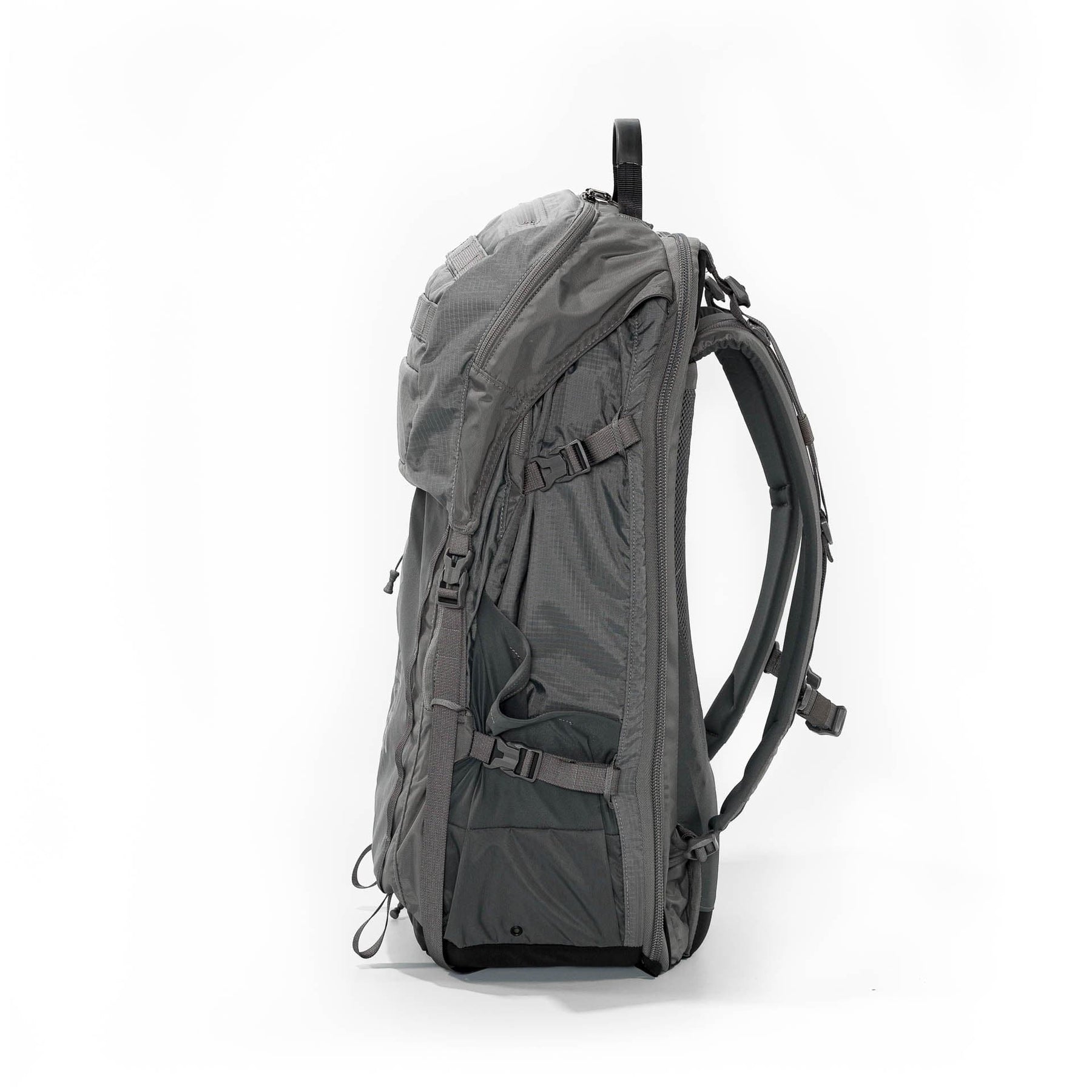
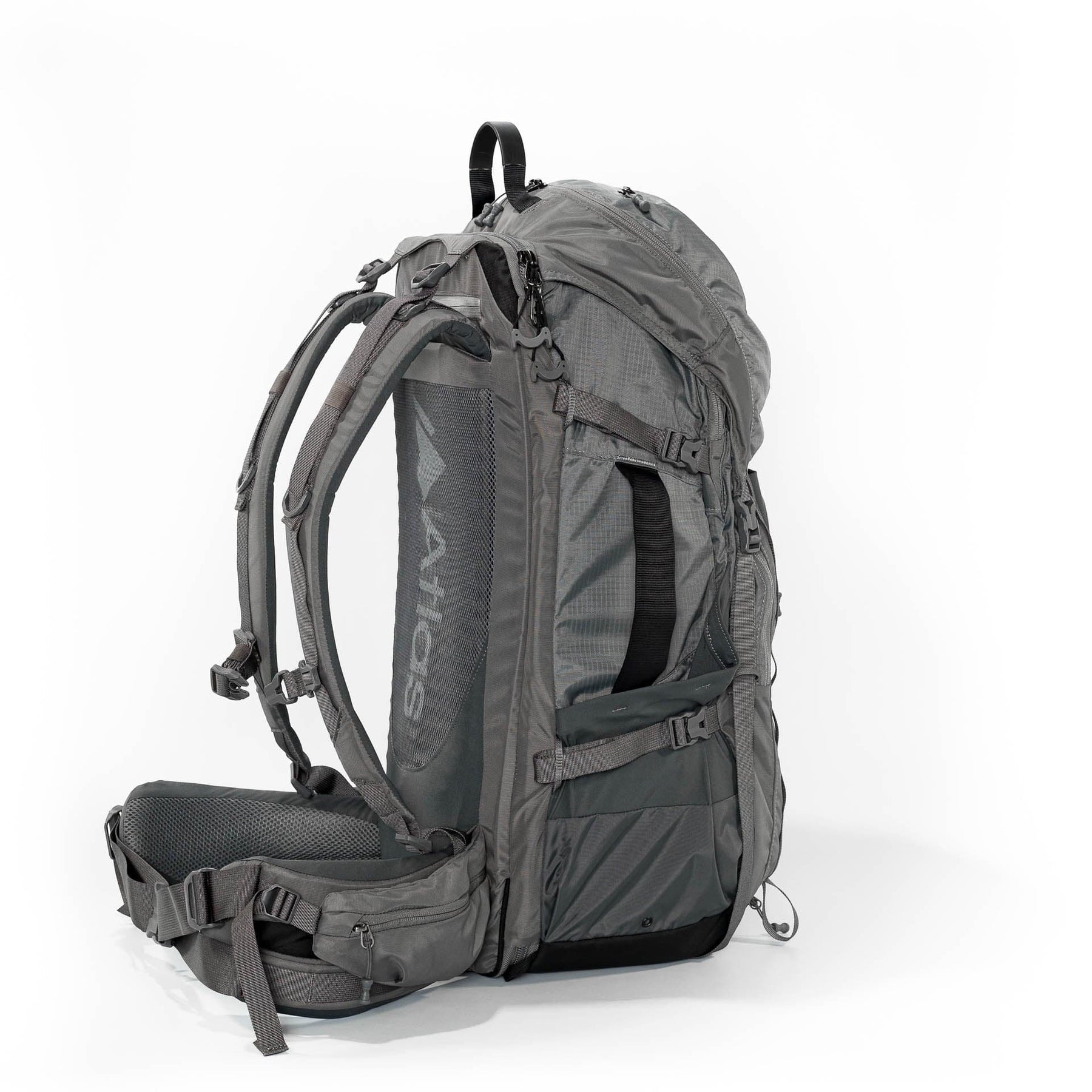
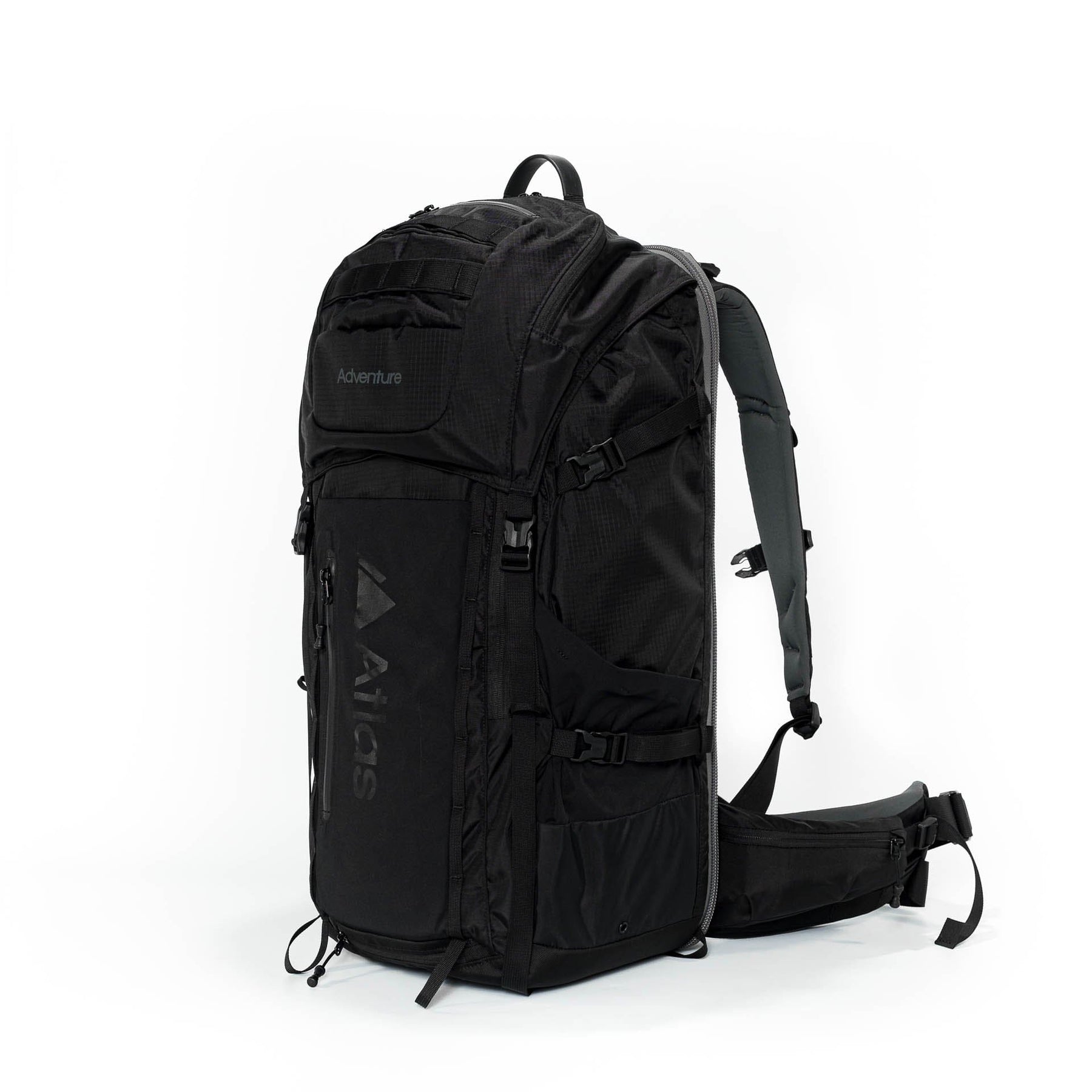
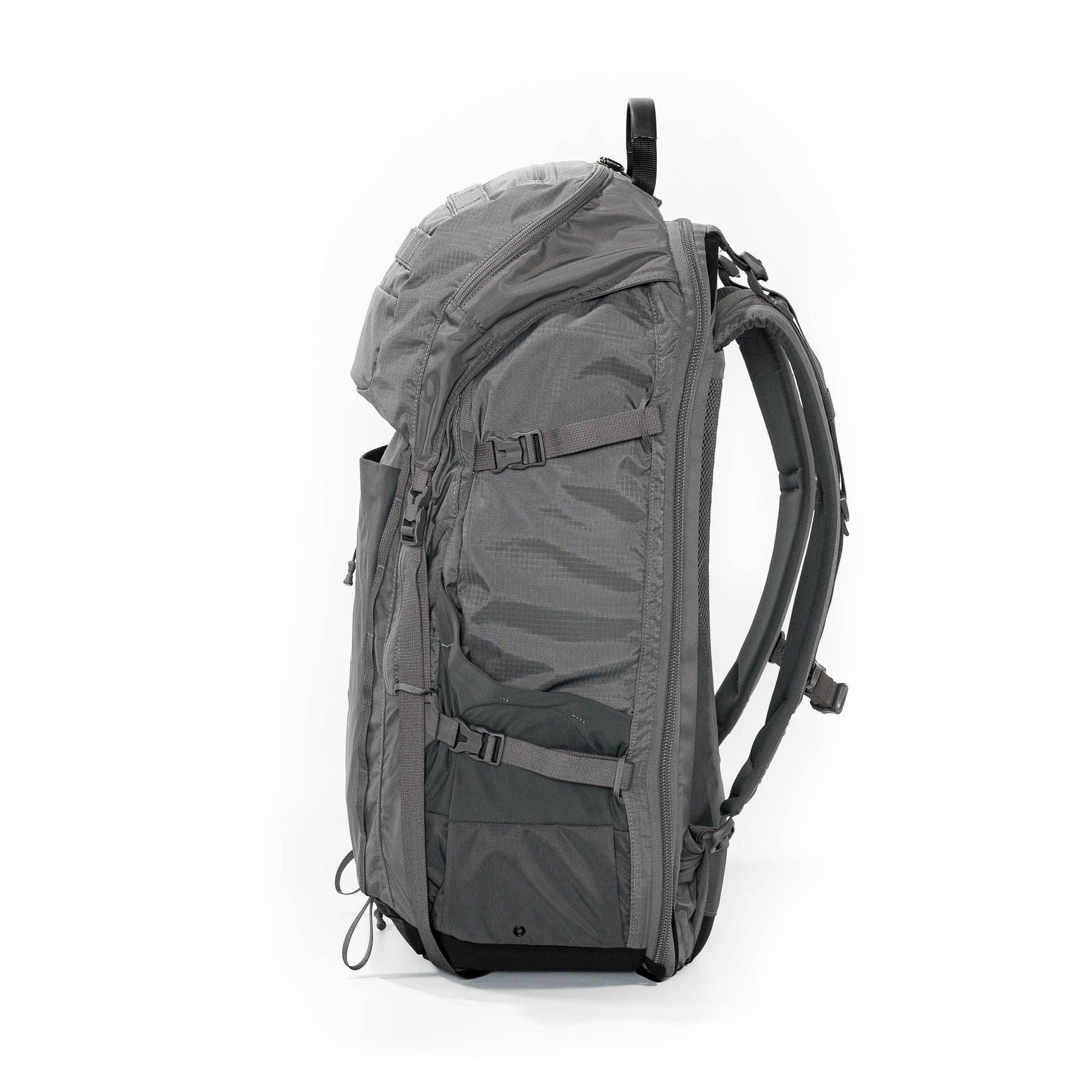
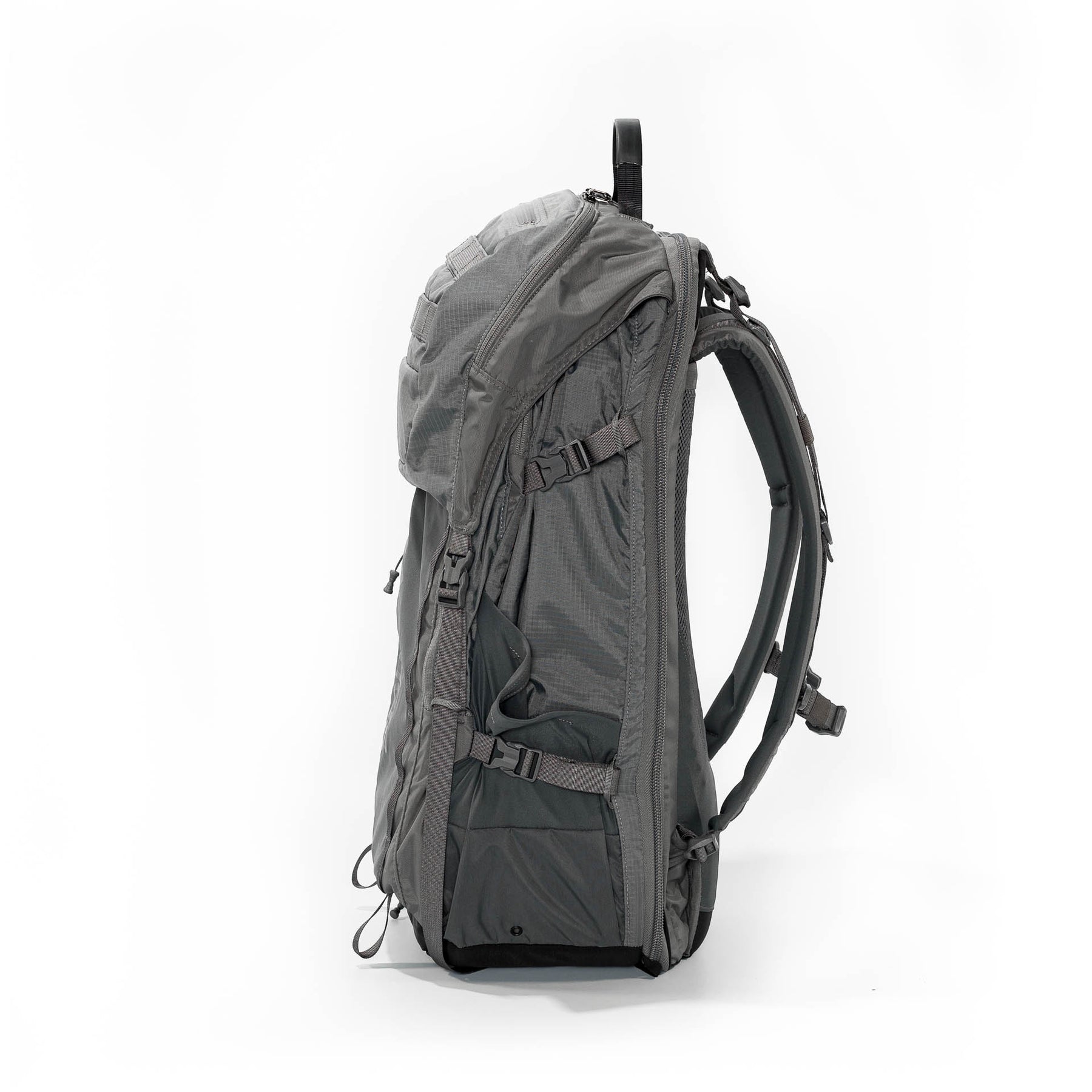
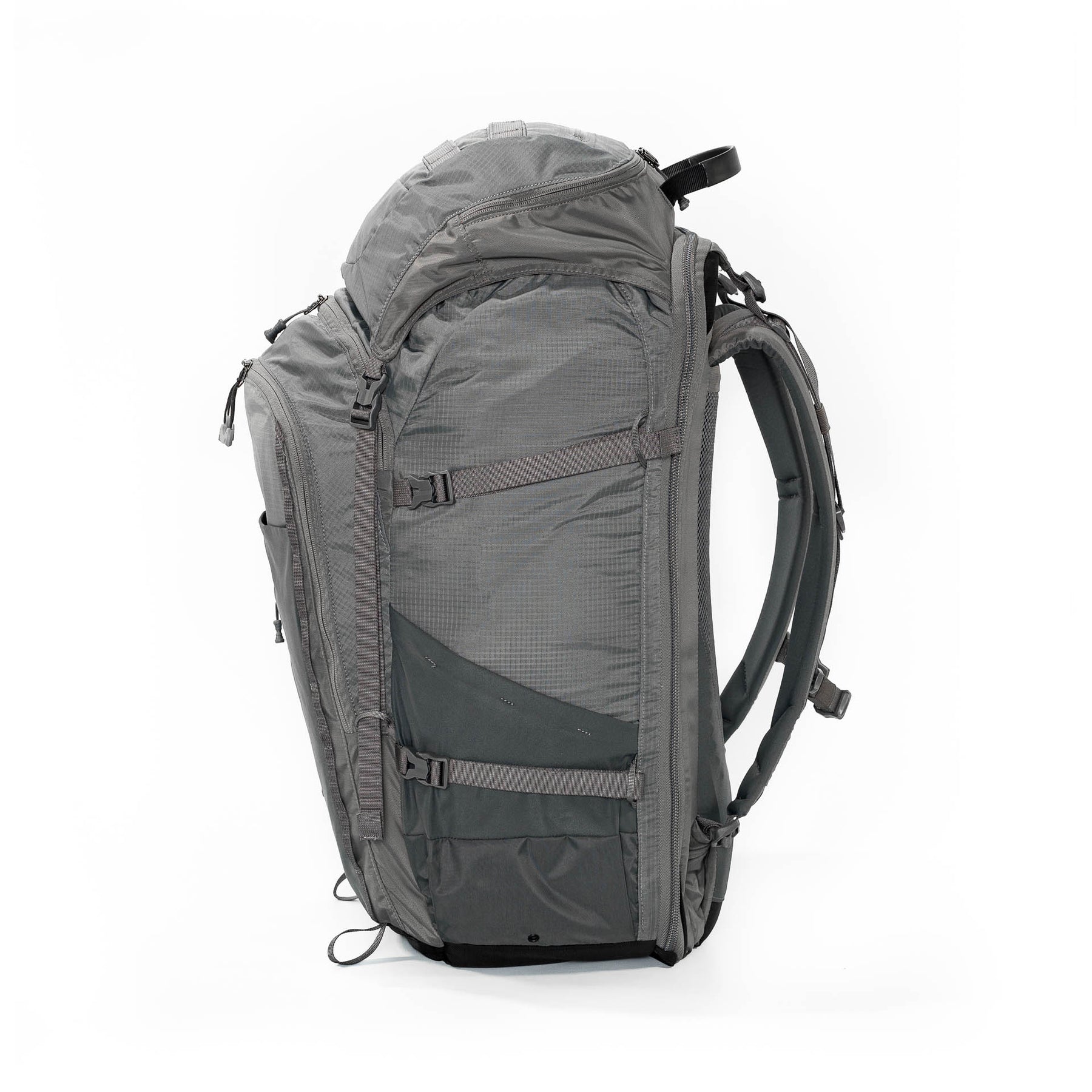
Atlas Adventure Camera Backpack Fits Big Glass

Pack : Atlas Adventure Camera Backpack
Torso Length : MEDIUM
Colorway : Black
Shipping calculated at checkout.
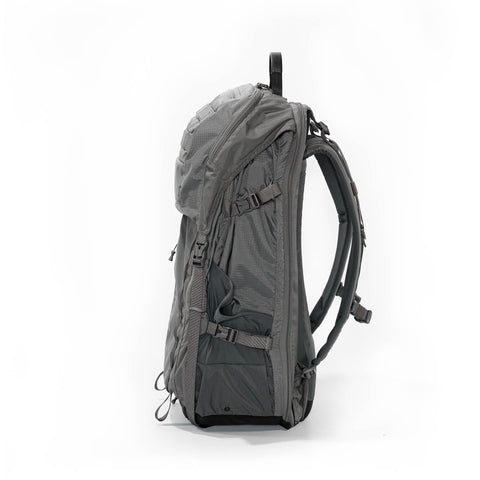
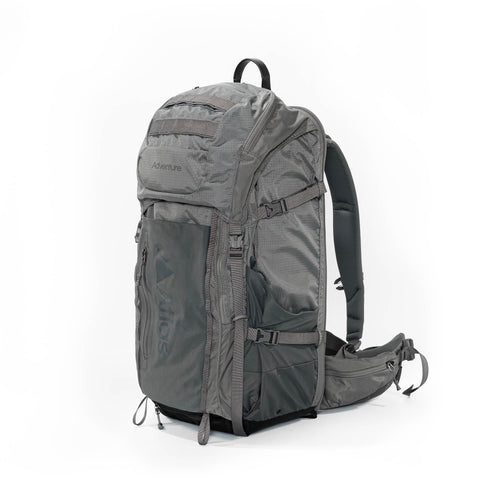
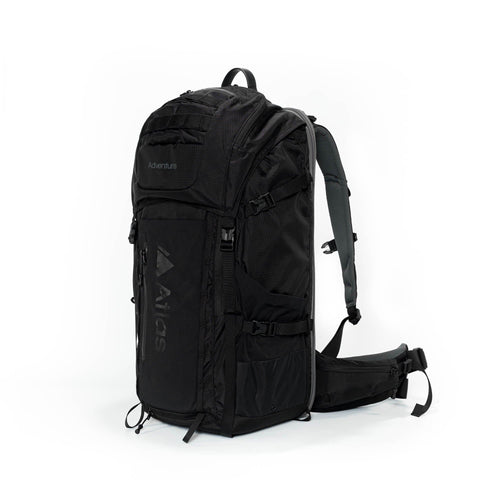



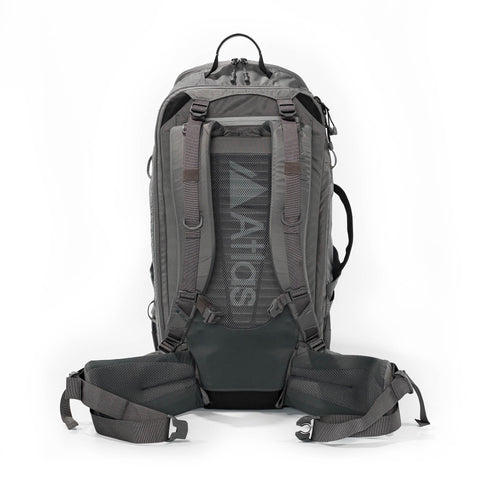
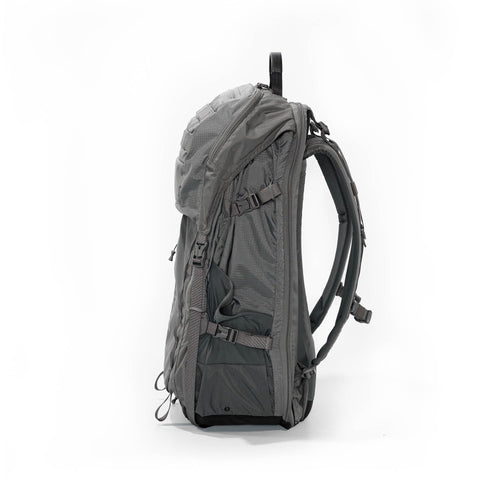


Atlas Adventure Camera Pack | 35-60L Deep Origami Core: Modular and Expedition Ready
Atlas Adventure Camera Backpack - 35-60L
Modular & Expedition Ready | Big Glass Specialist
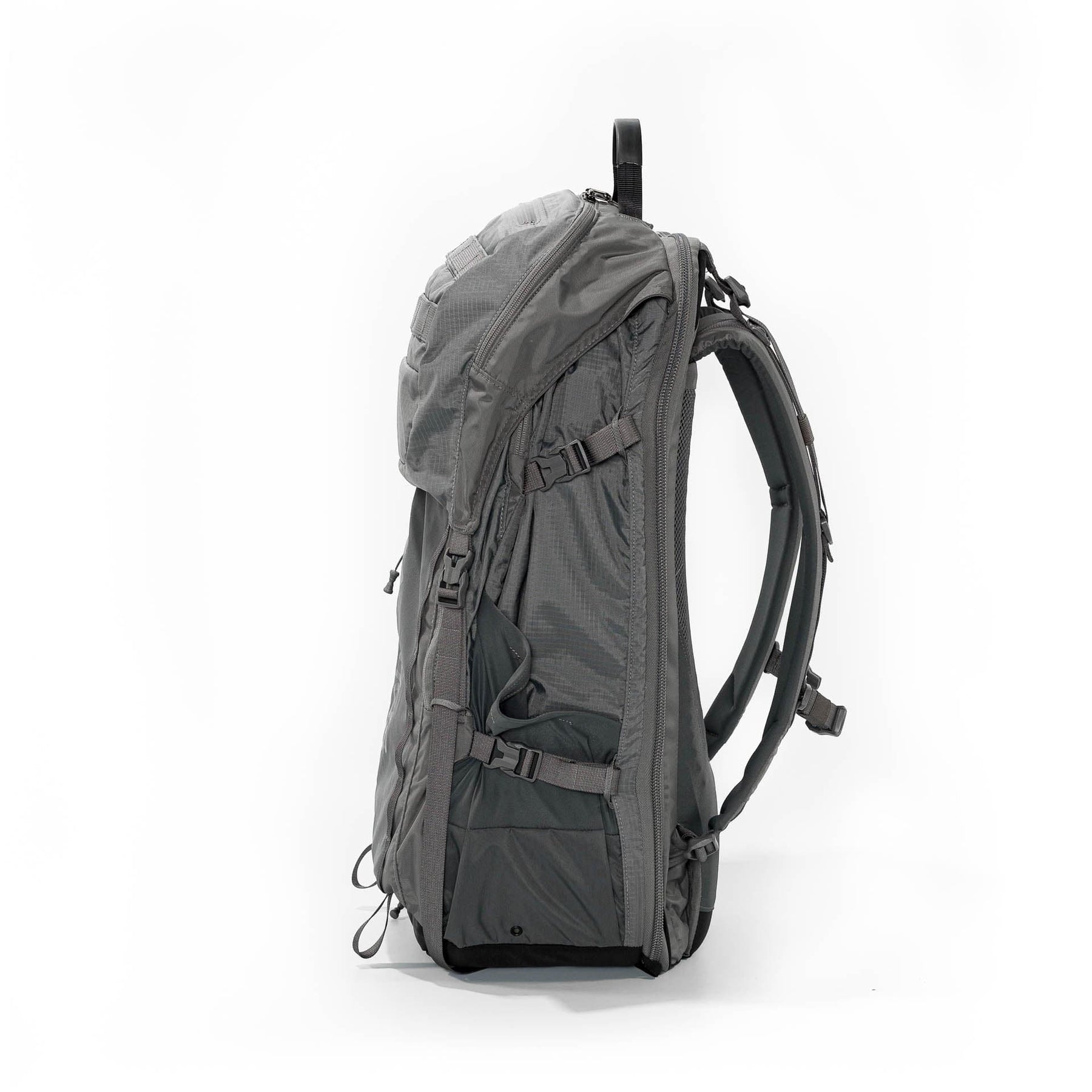
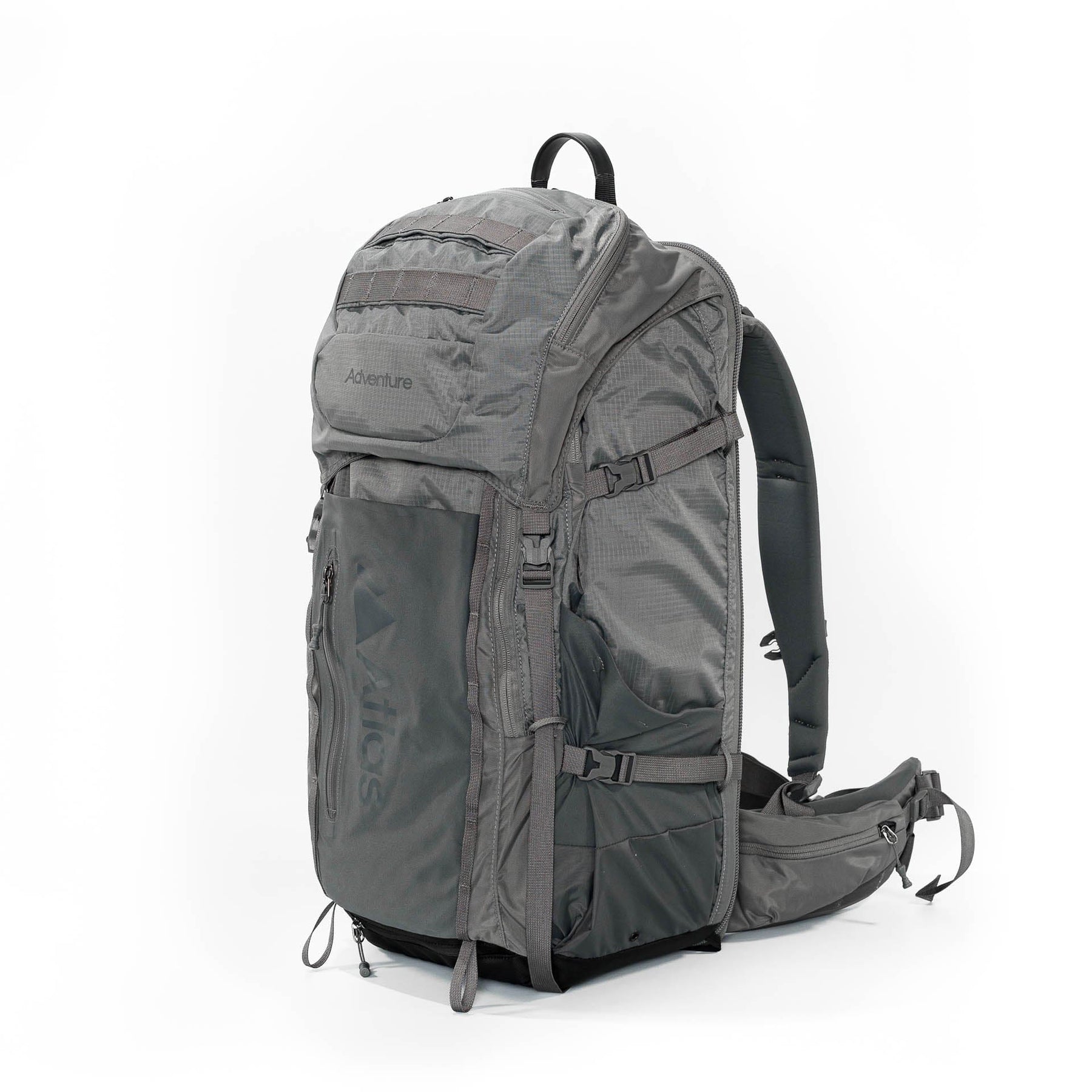
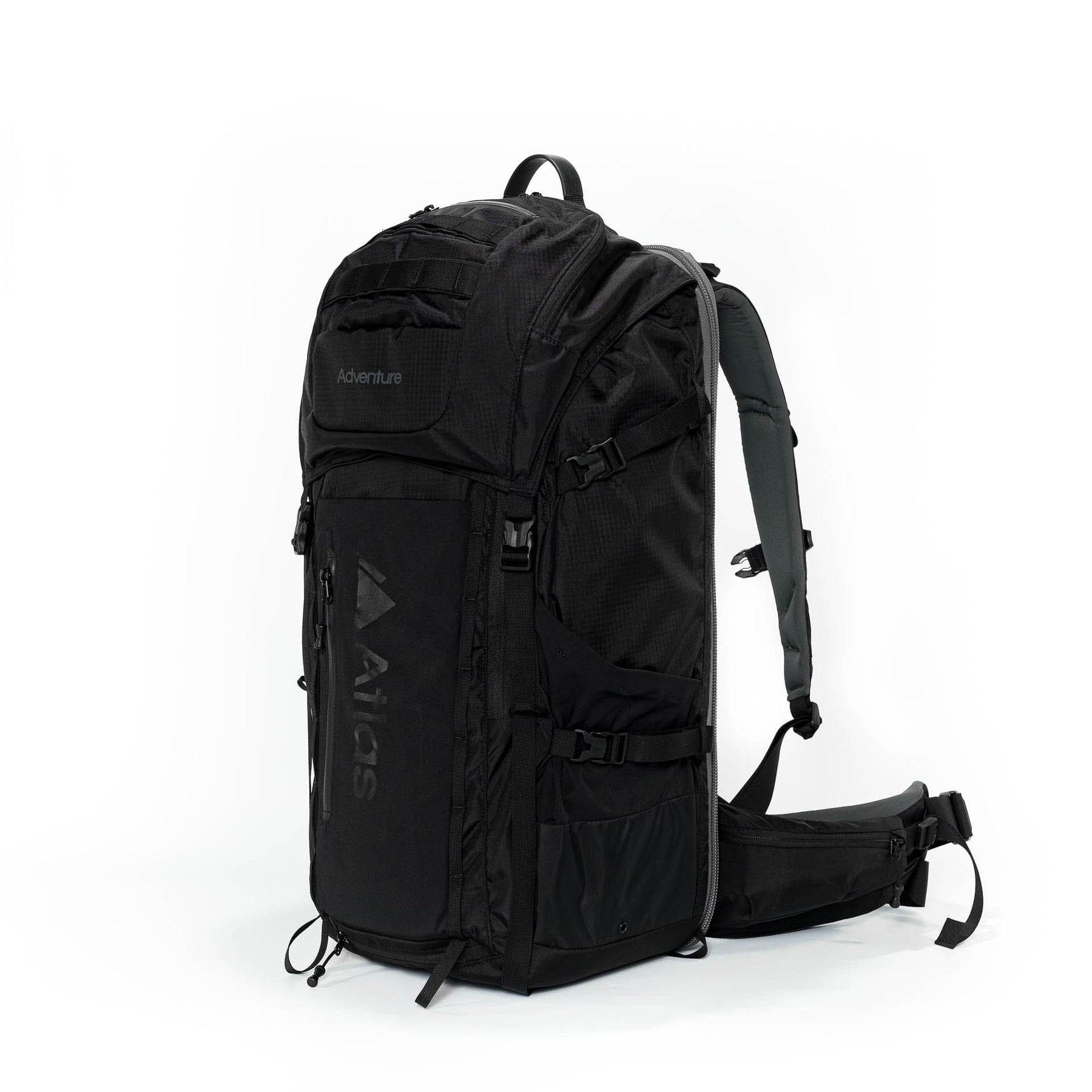
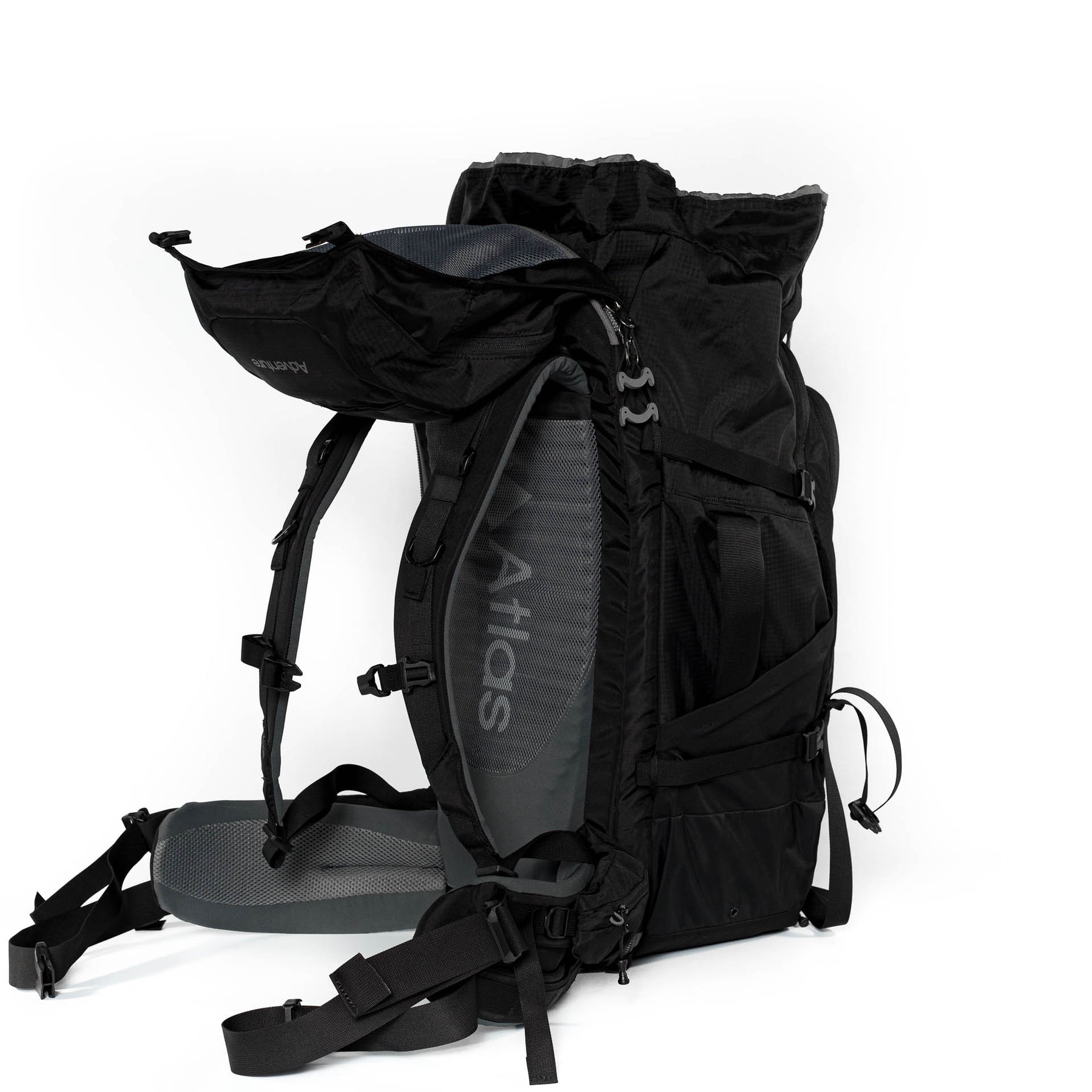
I built the Adventure Camera Backpack for the photographers who don't have a return date. When you're carrying a gripped body and an 800mm prime, you can't compromise on space or support. Using our patented Double-Fold Origami Camera Core™, this pack expands from 35L to 60L, allowing you to haul professional cine-rigs and multi-day expedition gear into the world's most remote terrains.
ADVENTURE CAMERA BACKPACK. One PACK. Three Missions.
- 35L | Transit Mode: Compressed for travel. Meets most carry-on cage requirements.
- 50L | Assignment Mode: Full pro-kit capacity with ample room for drone and personal gear.
- 60L | Expedition Mode: Maximum volume for tents, sleeping bags, and week-long backcountry survival.
Technical Shell
High-tenacity NY210 Rip Stop with x2 DWR coating and weather-sealed YKK® zippers for extreme environments.
Expedition Hardware
Equipped with Ice-Axe loops, Sleeping Bag loops, and a dedicated 1.5L Water Bladder pocket.
Heavy Duty Carry
Built to haul large tripods with a double row of front lash points and a reinforced "Large Grab Bag" top handle.
Storage & Access
Massive "Main Brain" top pocket for fast-access essentials and a 100% NY VELEX 240g freeform interior.
ADVENTURE CAMERA BACKPACK Fit & Technical Specifications
| Size | Recommended Fit | Dimensions |
| Medium Torso | Best fits up to 5'9" | 21" x 7" x 10" |
| Large Torso | Best fits 5'10" and taller | 23" x 7" x 10" |
| Camera Core | Double-Fold Origami Camera Core™ (Deep Depth for Big Glass) | |

| SPEC | MEASUREMENT |
| Height | 23in / 58.5cm |
| Height (no frame) | 20in / 51cm |
| Width | 11.25in / 28cm |
| Depth | 9in / 23cm |
| Laptop | Fits up to 17" laptops |
| Min Liters | 35 liters (fully compressed) |
| Max Liters | 60 liters (fully expanded) |
| Weight | 5.95lbs (no dividers / hip belt) |
| Warranty | Lifetime |
| Theft Coverage | 1 year (USA only) |

| FEATURE | MEASUREMENT |
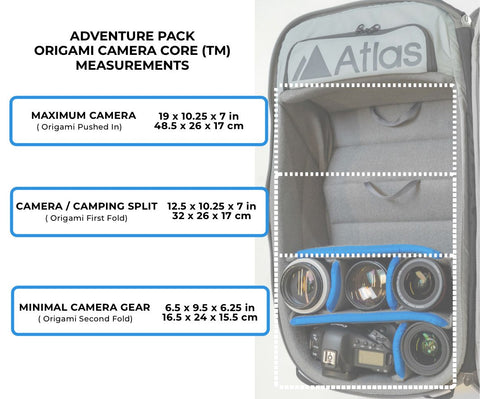
| Origami No Folds [STEP 1] | 19in / 48.5cm height |
| Origami Top Down [STEP 2] | 12.5in / 32cm height |
| Origami Both Down - [STEP 3] | 6.25in / 16.5cm height |
| Depth | 6-7in+ / 15.5-17cm+ *deeper after the first fold |
| Width | 9in / 23cm |
| 2nd Fold | *shallower towards bottom |
| Width | 9in / 23cm |
|
|


1. Cut a piece of string 18"/45.5cm
2. Hold the top to your C7 vertebrae and drop the bottom end.
3. Now feel all the way down to where string ends. It will fall either above or below your Iliac Center (essentially your love handles and where you rest your hands when you are putting your hands on your hips).
-----
PS: If the string goes past your love handles, that means your torso is
shorter than 18" = medium size pack. If the string ends before your love handles, that means your torso longer than 18" = large size pack.
| CHOOSE YOUR BELT SIZE |
BASED ON PANT SIZE |
PADDING TO HIPS |
| SMALL / MEDIUM ATHLETE BELTS |
30 - 33IN 76 - 84CM |
26IN | 66CM |
| MEDIUM / LARGE ATHLETE BELTS |
33 - 38IN 84 - 96CM |
31IN | 79CM |
| LARGE / X-LARGE ATHLETE BELTS |
36 - 42IN 92 - 106CM |
33IN | 86CM |
| SMALL MEDIUM ADVENTURE HIP BELTS + TRAVEL |
28 - 33IN 71 - 84CM |
27IN | 68CM |
| MEDIUM / LARGE ADVENTURE HIP BELTS + TRAVEL |
34 - 38IN 86 - 97CM |
30IN | 76CM |
| LARGE / X-LARGE ADVENTURE HIP BELTS + TRAVEL |
36 - 44IN 91-117CM |
33IN | 84CM |
| X-LARGE / XX-LARGE ADVENTURE HIP BELTS |
42 - 52IN 106-132CM |
36IN | 92CM |
LET'S CHECKOUT THE SPECS AND COMPARE PACKS
Athlete vs. Adventure Exterior Size Comparison

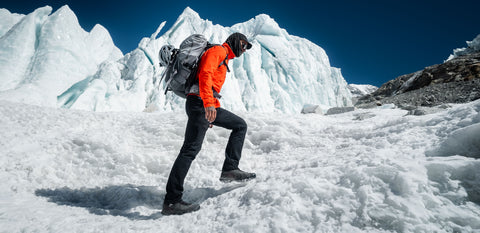
Quick Rate | Estimate Shipping Check
*These rates are estimates. Final shipping rates are based on items added to your cart and are provided at checkout.

ORIGAMI CAMERA CORE (TM) — US PATENT NO. 11,033,086
Unlike camera bags that need to be stuffed with ICU's or camera cubes, the Adventure Pack has a sewn-in two-fold Origami Camera Core (TM). With a simple push or pull you shift up to 44 liters of space between the camera section and the camping section. No noise, no inserts, no pressure fitting. Just friction.
HOW THE ORIGAMI CAMERA CORE (TM) WORKS
NO ICU OR CAMERA CUBES

SIMPLE PUSH AND PULL
INTERNAL + EXTERNAL EXPANSION
How Camera Gear Fits the Atlas Adventure Camera Pack | 35-60L Deep Origami Core: Modular and Expedition Ready

ADVENTURE PACK: MAX NON-CAMERA

ADVENTURE PACK: BALANCED SETUP

ADVENTURE PACK - MAX CAMERA
LET'S COMPARE: ADVENTURE vs. ATHLETE

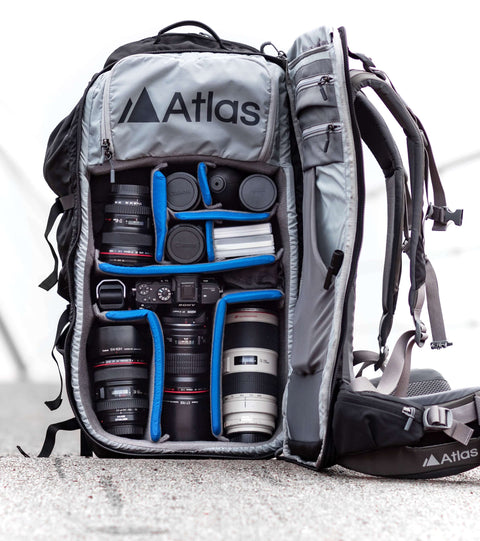
ADVENTURE PACK: Video & Camera Gear Storage
ADVENTURE PACK: Access and Workflow
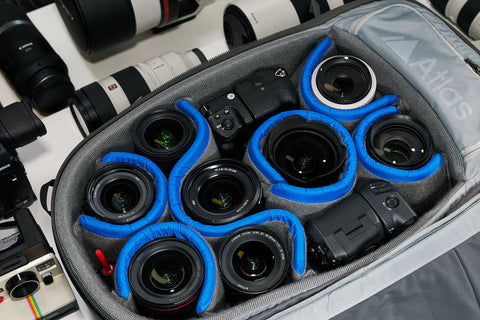
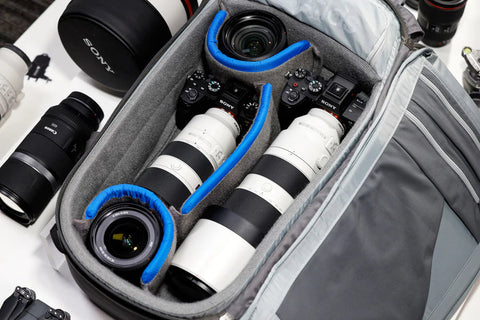
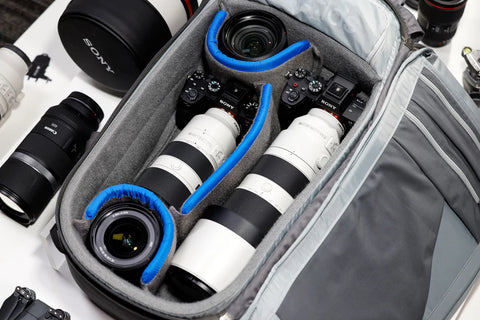
ADVENTURE PACK: Gripped bodies easily fit

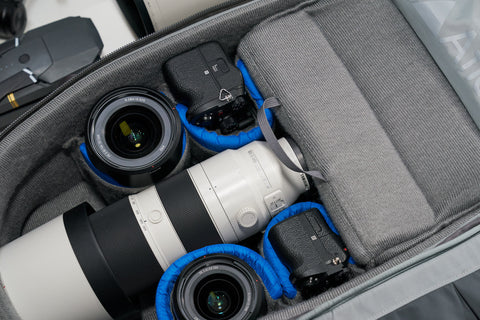
ADVENTURE PACK: Easily fits big glass
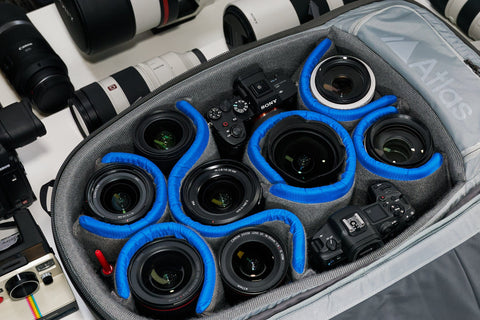
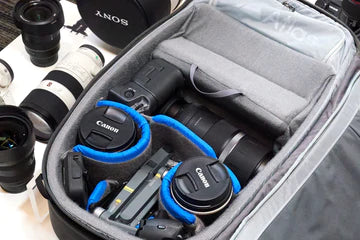
Sony a7riii with DJI kit in the Adventure Pack
Atlas Adventure Camera Backpack – Expandable, Travel-Ready Photography Gear Storage
Atlas Adventure Pack Specs

EXTERIOR SIZE: 30 Liters

EXTERIOR SIZE: 45 Liters

EXTERIOR SIZE: 60 Liters
See the Atlas Adventure Pack in Action — 35–60L Expandable Camera Backpack
DOUBLE FOLD ORIGAMI
Frequently Asked Questions
What about shoulder straps shaped specifically for women?
Curved shoulder harness systems for women are recommended when hip belts are not adequate to support the load. When you have a properly sized pack and hip belt, a straight shoulder harness works perfectly.
How does the Origami Camera Core work on the Adventure, and what makes it different from a camera bag?
Inspired by the Japanese art of paper folding, we invented and patented a new type of camera core. Unlike camera bags that need to be stuffed with ICUs or camera cubes, the Adventure Pack has a sewn-in two-fold Origami Camera Core. Each fold shifts space between the camera and camping sections of the pack. It's a better system than ICUs because it's safer for camera gear, distributes weight better, holds more gear per liter, allows for both camera and camping gear in the same bag, and can be resized on the fly. Instead of pressure fitting, we use friction, which is key to how the Origami Camera Core functions.
What is the history behind the Adventure Pack?
We designed the Adventure Pack because camera bags are all giant boxes. We wanted a thinner, more nimble design that holds weight close to the body and doesn't impede movement in busy urban areas or while moving over terrain. We designed the Origami Camera Core so users can move space inside the pack without having to remove and insert anything. Camera bags are floppy, lack structure, and have to be filled with smaller bags via pressure fit, which fundamentally compromises load carry ability. The Adventure Pack was the first pack we designed, back in 2014, and it's been battle tested worldwide since 2018 by thousands of pros and amateurs.
What are the full features of the Adventure Pack?
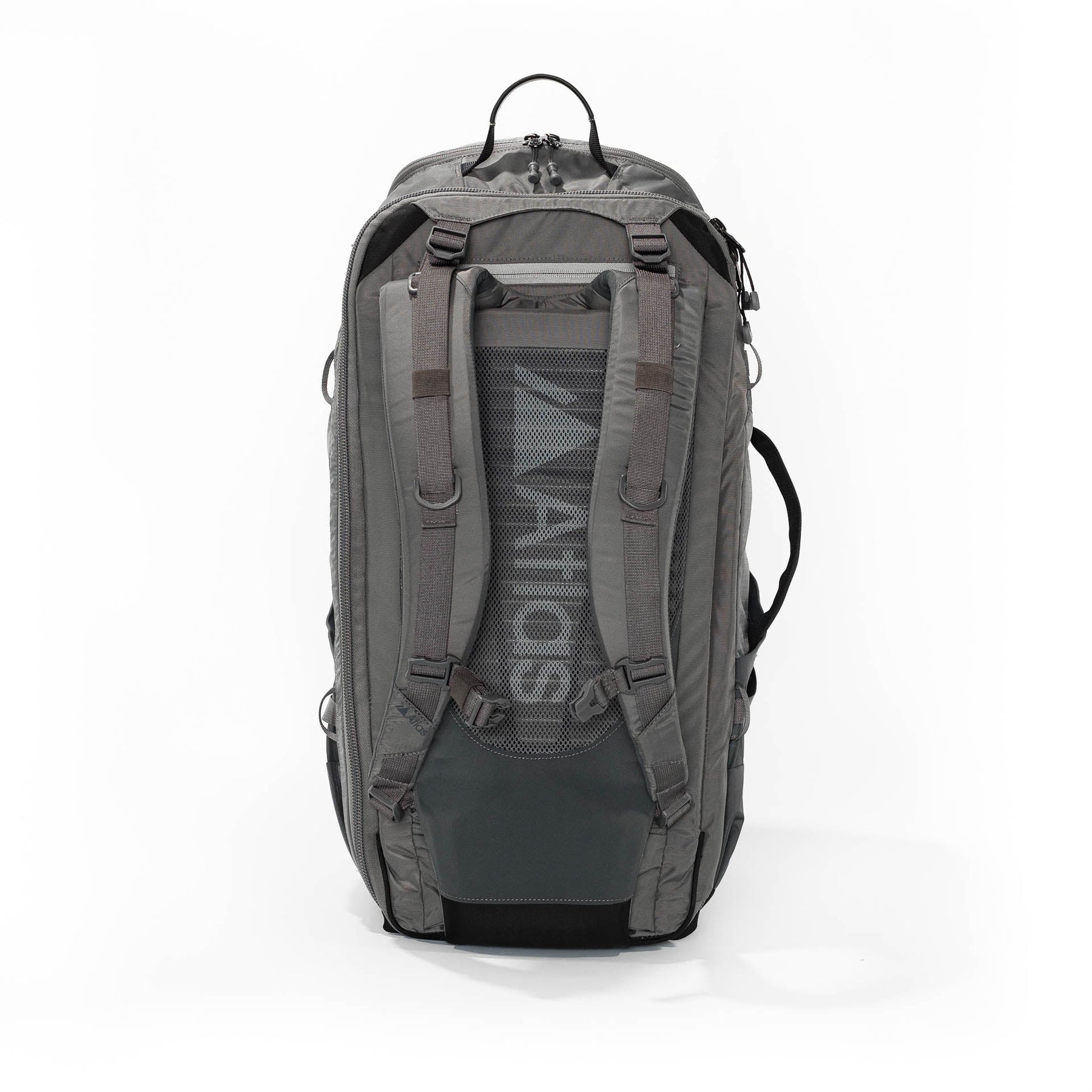
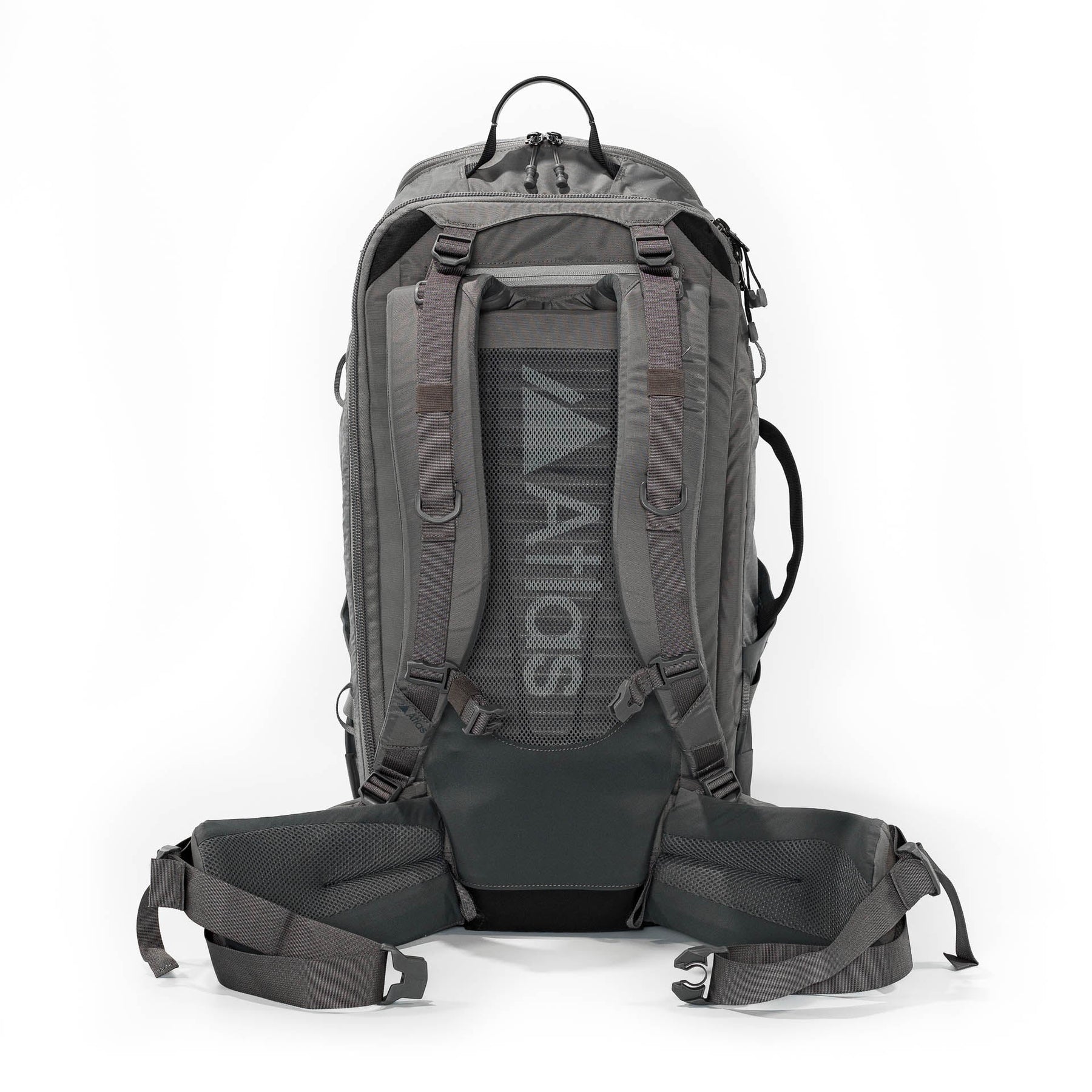
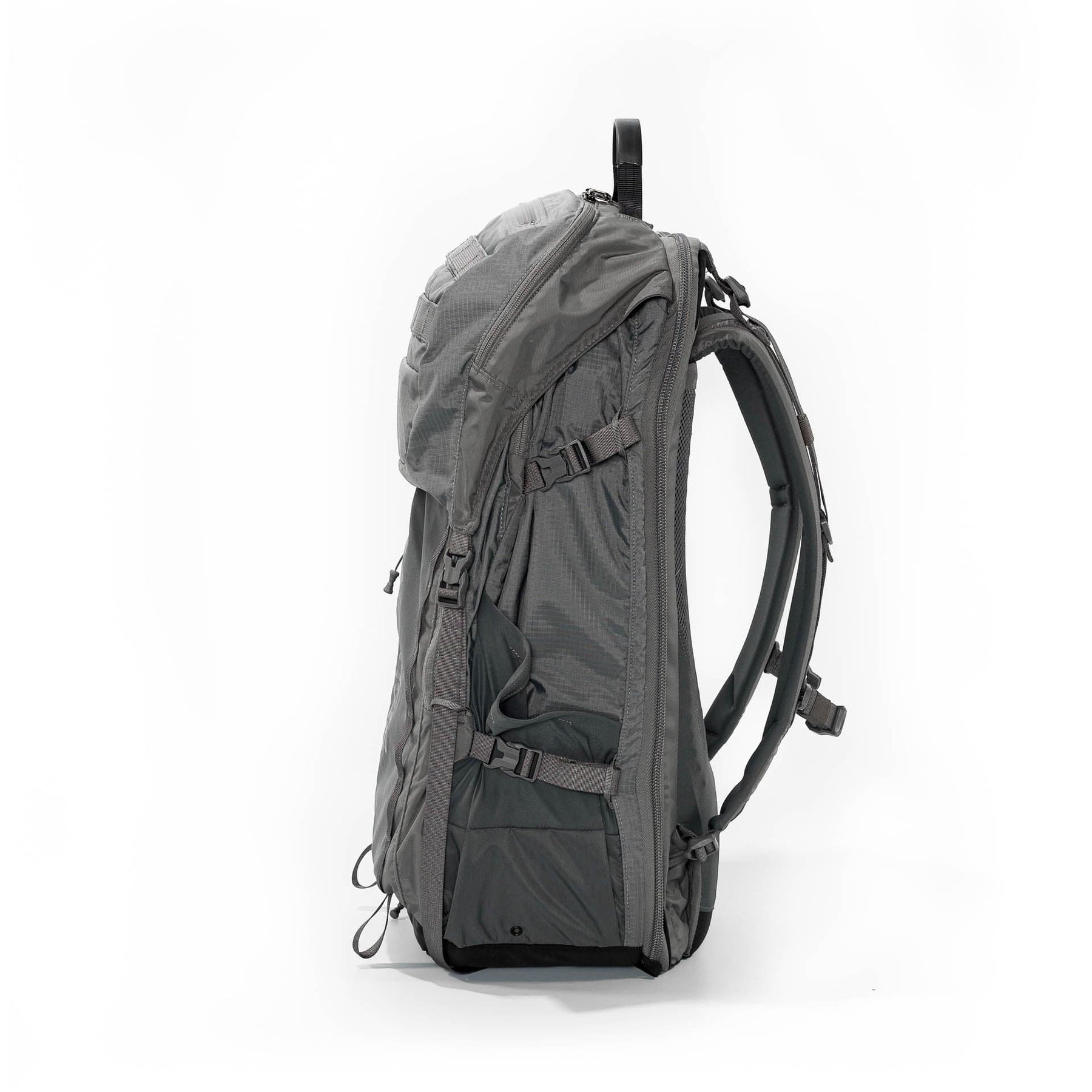
Removable overbuilt shoulder harness, load lifter adjustable fit, fireman style Harrington side handle, removable frame and stay, numerous attachment points from MOLLE to axes and sleeping bags, incredible weight distribution and support, 10mm thick and curved dividers, removable proper hiking hip belt, two-fold Origami Camera Core, weatherproof 240 double rip stop shell, water bladder loops and tube routing that fits 3 liter bladders, two stretch side pockets that fit 48oz Nalgene bottles, two hidden dump pouches that also fit 48oz Nalgene bottles, and YKK buckles and zippers throughout.
Which size Adventure Pack should I get, medium or large?
While torso fitting is best, it's easiest to start with height, which works about 86% of the time. Check the size chart and the fitting guide if you want to measure your torso directly.
What if I'm right at the 18 inch torso mark between Adventure sizes?
Go shorter if you are of average weight and between sizes. If you have a medium torso and are broad chested, consider getting the large. Please chat with Pro Support for help.
What is the actual difference between the medium and large Adventure Pack?
There is only one difference. The large has a longer back panel to accommodate longer torsos over 18 inches / 45.5cm. The medium has a shorter back panel for torsos under 18 inches. There is no difference in volume, footprint, or any other measurement, the packs are identical in every other regard.
How easy is the frame to remove in the Adventure Pack?
Super easy to remove and reinstall, no tool needed. Takes less than 10 seconds either way. Note the orientation of how the frame curves when reinstalling.
What changed between Gen 1 and Gen 2 Adventure Packs, and how do I tell which one I have?
The fastest tell is the logo: a tonal logo is Gen 2 or newer, a big bright logo is Gen 1. If the pack has the newer YKK style buckles it's a Gen 2 pack, and packs sold prior to 2021 are typically Gen 1. Beyond identification, the packs changed substantially: Gen 1 held a fixed 70L total volume with 30L expandable for non-camera storage, weighed 6.1 lbs without the belt, and used a single-fold core with two depth states (9in compressed, 13in expanded) maxing out at 17.5 by 10.25 by 6.25 inches. Gen 2 dropped to 5.4 lbs and switched to a double-fold, three-position core across three distinct setups (35L, 45L, 60L), growing the maximum camera core to 19 by 10.25 by 7 inches despite the lighter weight, and uses YKK buckles throughout. Measurements are guidelines rather than exact specs, since the pack's material will bend and shift based on how you pack it.
Do you recommend buying a used Gen 1 Adventure Pack?
Check the torso length first. If it's a Gen 1 pack and you have gear that needs the two-fold Origami Camera Core for maximum camera space, the Gen2 update is worth considering. That said, Gen 1 packs are still great for many setups. Get a new hip belt and check that the dividers are still in good shape, since foam breaks down over time, so fresh dividers are a good investment on any used pack.
What is the Adventure Pack designed for?
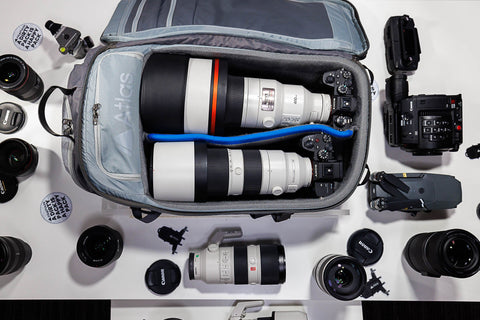
The Adventure is designed for larger, more demanding camera kits. Customers have carried lenses like the Sony 200-600 and Sony 600mm f/4. It holds camera gear alongside a full day's worth of personal items, and long telephoto lenses should sit on the inside bind, the spine side of the pack.
What are the three capacity setups of the Gen2 Adventure Pack?
Gen2 expands across three setups. 35L: 23in (58.5cm) tall, 11.25in (28cm) wide, 9in (23cm) deep. 45L: 24in (61cm) tall, 11.25in (28cm) wide, 11in (28cm) deep. 60L: 26.5in (67cm) tall, 11.25in (28cm) wide, 13.5in (34cm) deep. Width stays constant across all three, only height and depth change as you expand.
How much does the Gen2 Adventure Pack weigh?
The Gen2 Adventure weighs 5.4 lbs (2.45 kg).
How does the camera core shift space between camera gear and camping gear on Gen2?
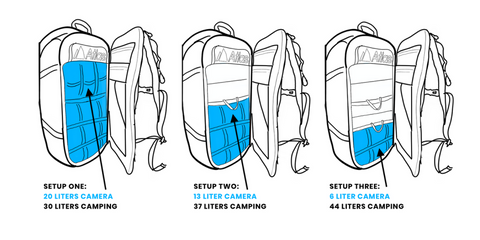
The Gen2 double-fold Origami Camera Core has three positions. Origami pushed in gives maximum camera space at 19 by 10.25 by 7 inches, holding up to 20L of camera gear with 30L left for camping gear. The first fold splits camera and camping space at 12.5 by 10.25 by 7 inches, down to 13L camera and 37L camping. The second fold minimizes camera space to 6.5 by 9.5 by 6.25 inches, just 6L camera and 44L camping, for trips where camera gear is a small part of the load.
Is the Adventure Pack airline compatible?
Yes. The Adventure has a removable frame that makes it airline-compatible. On Gen2, the 35L setup at 23 inches tall is the most compact configuration for stricter carry-on sizers. This is based on standard major-carrier limits, so always check your specific carrier's requirements before flying, since budget and regional airlines can enforce stricter rules.
What accessories is the Adventure Pack compatible with?
The Adventure is compatible with the MOLLE panel, cargo nets, and the Click QD hip system, in addition to the Atlas Adventure-style hiking hip belt.
How does the Adventure compare to the Athlete Pack?
The Adventure is the larger, heavier-duty option, expanding up to 60L (Gen2) with a double-fold camera core built for serious telephoto glass and long days in the field. The Athlete is smaller and lighter, topping out around 40L with a single-fold core built for compact mirrorless kits and everyday carry. If you're regularly hauling big glass like a 200-600mm, the Adventure is the right choice; for compact kits and personal gear, the Athlete is the better fit.
ATLAS PACKS CUSTOMER REVIEWS
Atlas Adventure Camera Pack | 35-60L Deep Origami Core: Modular and Expedition Ready
SPECIFICATIONS AND MEASUREMENTSAtlas Adventure Camera Backpack – Expandable, Travel-Ready Photography Gear Storage DEEP CORE CORE
DOUBLE FOLD ORIGAMI
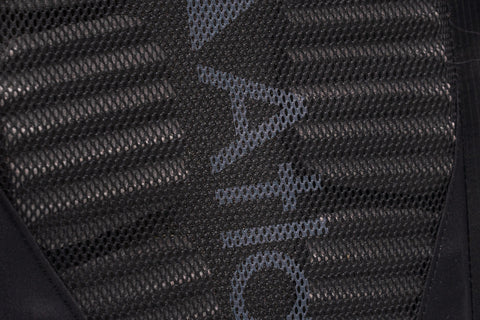
ACCESS AND WORKFLOW GRIPPED BODIES EASILY FIT BIG GLASS AIR FLOW MESH BACKPANEL
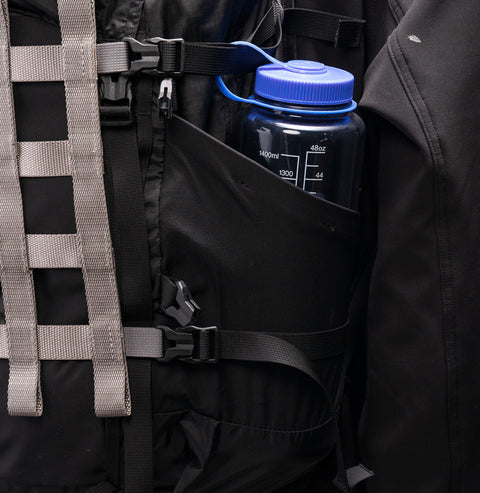
TRIPOD / WATER SIDE POCKETS
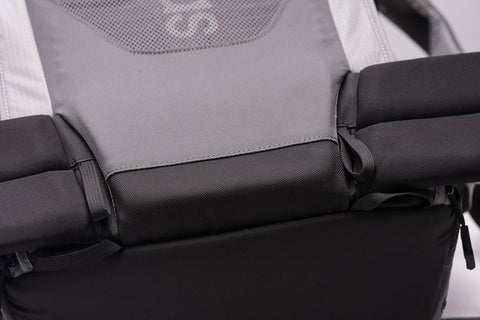
SLEEPING BAG LOOPS

Built for boundless exploration, the Atlas Adventure Camera Backpack adapts from a streamlined 35 liters to an expansive 60 liters, accommodating everything from day hikes to extended expeditions. Its durable, lightweight design ensures it’s rugged enough for any terrain yet travel-friendly, even fitting under airplane seats when compacted. The Double-Fold Origami Camera Core™ keeps gear securely organized and easily accessible, while optional Athlete or Adventure Hip Belts evenly distribute weight for all-day comfort. With a removable frame for added stability and compatibility with QD Add-Ons for extra storage, this pack is the ultimate choice for photographers who need reliability, space, and quick access wherever adventure calls.
From travel to trekking, the Atlas Adventure Pack is designed to make your journey easier, offering the perfect balance between compact storage and versatility.
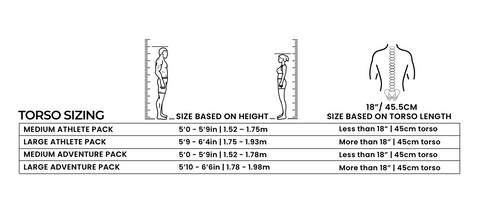
ADVENTURE PACK FITTING GUIDE
Both the Athlete and Adventure Packs are sized based on an 18" / 45.5cm torso length. If your torso is shorter than 18 inches the medium is the right fit. If your torso is longer than 18 inches the large is the right fit. Go shorter if in doubt. A pack that is too tall will not distribute weight properly.
BASED ON HEIGHT:
+ If you are 5'8" / 1.7m or below, the medium size pack typically fits best.
+ If you are taller than 5'11" / 1.8m the large size pack typically fits best.
HOW TO MEASURE YOUR TORSO:
1. Cut a piece of string to exactly 18" / 45.5cm.
2. Hold the top to your C7 vertebrae and drop the bottom end.
3. Feel all the way down to where the string ends. It will fall either above or below your Iliac Center (essentially your love handles and where you put your hands on your hips).
If the string goes past your love handles, your torso is shorter than 18" = medium size pack.
If the string ends before your love handles, your torso is longer than 18" = large size pack.
INCLUDED WITH THE PURCHASE OF YOUR PACK
CUSTOM FIT HIKING-GRADE HIP BELT
LET'S CHOOSE YOUR BELT
The hip belt is the most important part of camera backpacking. Without the right size hip belt, one with padding that properly wraps around the front of your hip bones, you will not be able to properly load the weight of your heavy camera gear. Atlas Packs offers three different style hip belts in four size ranges. The hip belt is designed to transfer around 90% of your backpack's weight from your shoulders to your hips.
All Atlas Packs hip belts are interchangeable and can be used with all packs. And because the hip belt is removable, it's easy to make your pack smaller when you need it. Perfect for daily use and light loads.
THREE STYLES. FOUR SIZES. ONE IS RIGHT FOR YOU.

THE ADVENTURE HIP BELT
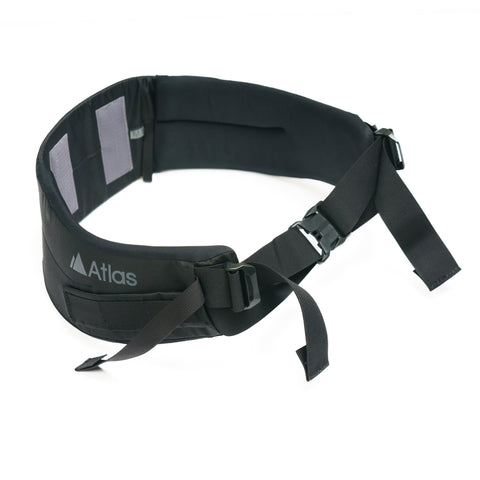
THE ATHLETE HIP BELT
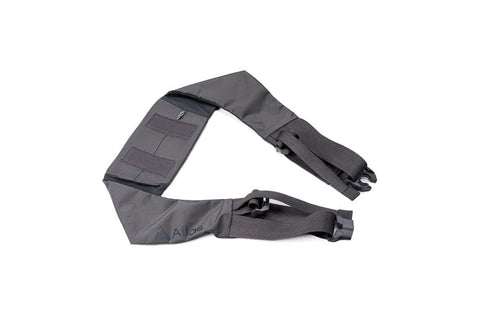
THE TRAVELER'S HIP BELT
Featured Reviews from Leading Outdoor Publications
Trusted by Experts in Outdoor Adventure and Photography

ADVENTURE PACK BACKGROUND AND HISTORY
We designed the Adventure Pack because camera bags are all giant boxes. We wanted a thinner, more nimble design that holds weight close to the body and doesn't impede movement in busy urban areas or while moving over terrain.
We also wanted a way to move space inside the pack without having to remove and insert anything, which is why we designed and developed our Origami Camera Core (TM). Camera bags are floppy and lack structure and have to be filled with smaller bags to secure camera gear. These systems add costs and weight and use a "pressure fit" design. Pressure fitting results in a fundamental compromise to a bag's load carry ability, which is why camera bags carry so much heavier than they actually weigh.
With the Adventure Pack, we've designed the world's first and only true hybrid, taking the best from the world of camera and the outdoors and combining them together. Countless awards and accolades. Battle tested worldwide since 2018 by thousands of pros and amateurs alike.
The Adventure Pack was the first pack we designed. It was 2014 and we wanted to hit the ground with a pack designed exclusively for the professional photography and video market. None of the camera bag companies making bags for this market properly load the weight of heavy gear to your hips. We designed the Adventure Pack to fix that.
Frequently Asked Questions
Atlas Adventure Camera Pack | 35-60L Deep Origami Core: Modular and Expedition Ready FAQsWe designed the Adventure Pack because camera bags are all giant boxes. We wanted a thinner, more nimble design that holds weight close to the body and doesn't impede movement in busy urban areas or while moving over terrain. We designed and developed the Origami Camera Core (TM) so users can move space inside the pack without having to remove and insert anything. Camera bags are floppy and lack structure and have to be filled with smaller bags via pressure fit, which fundamentally compromises load carry ability. The Adventure Pack was the first pack we designed, back in 2014. It's been battle tested worldwide since 2018 by thousands of pros and amateurs.
+ Removable overbuilt shoulder harness
+ Load lifter adjustable fit
+ Fireman style "Harrington" Side-Handle
+ Removable frame / stay
+ Numerous attachment points from MOLLE to axes and sleeping bags
+ Incredible weight distribution and support
+ 10mm thick and curvy dividers
+ Removable proper hiking hip belt
+ Two-fold Origami Camera Core (TM)
+ Weatherproof 240 Double Rip Stop shell
+ x2 water bladder tube routing slits under top lid
+ x2 stretch side pockets (fits 48oz Nalgene)
+ x2 hidden dump pouches (fits 48oz Nalgene)
+ YKK Buckles and Zippers
+ Plus many more...
Inspired by the Japanese art of paper folding, we invented and patented a new type of camera core. Unlike camera bags that need to be stuffed with ICU's or camera cubes, the Adventure Pack has a sewn-in two-fold Origami Camera Core (TM). Each fold shifts space between the camera and camping sections of the pack.
The Origami Camera Core (TM) is a much better system than ICU's because:
+ It's safer for camera gear
+ Distributes weight better
+ Holds more gear per liter
+ Allows for both camera and camping gear
+ Can be resized on the fly
Instead of pressure fitting we use friction, which is key to how the Origami Camera Core (TM) functions.
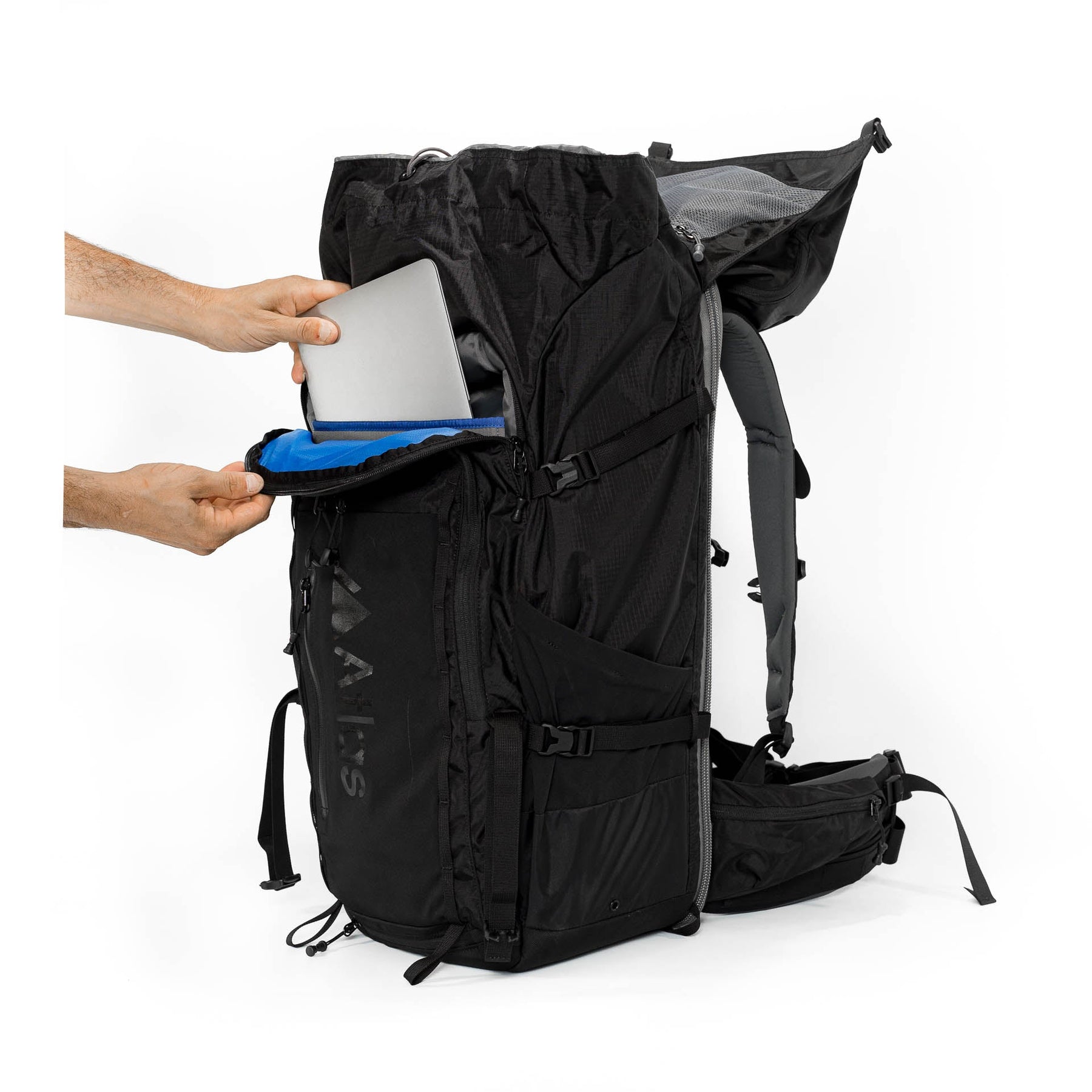
Laptops up to 17" will easily fit. The Adventure Pack has a dedicated pocket for laptops located between the admin panel and front section, accessible without having to unzip the backpanel or unclip the front buckles.
While torso fitting is best, it's easiest to start with height. This method works 86% of the time. Check the size chart for sizing and the fitting guide above if you want to measure your torso directly.
It's not going to fit well. With the Adventure Pack there are no benefits to the wrong size. Get the size based on your torso length. Pack size is different from liters or capacity. There is no difference between the medium and large in terms of capacity or footprint, only the backpanel height differs.
With the Adventure Pack go shorter if you are of average weight and between sizes. If you have a medium torso and are broad chested consider getting the large. Please chat with Pro Support for help.
There is only one difference between the medium and large Adventure Pack. The large has a longer backpanel to accommodate longer torsos over 18" / 45.5cm. The medium has a shorter backpanel for torsos under 18". There is no difference in volume, footprint, or any other measurement. The packs are identical in all other regards.
A dirty pack is certainly a happy pack, but a cleaned dirty pack is even happier.
To clean the shell and zippers, give your pack a steam shower for 15-20 min and use baby wipes and microfiber towels to clean the ripstop and get into the grooves around the zippers.
To clean the inside of your pack, remove all dividers and gear and from the inside of the non-camera section push hard on the bottom of the camera core so it pops out.
Super easy to remove and reinstall. No tool is needed. Takes less than 10 seconds for either motion. Please note the orientation of how the frame curves when reinstalling.
The best way to tell is by looking at the buckles. If the pack has the newer YKK style buckle it's a GEN2 pack. Packs sold prior to 2021 are typically GEN1 packs. The main GEN2 updates include a decreased exterior height (now 23" / 58.5cm), a redesigned two-fold Origami Camera Core (TM) that shifts twice as much space, and an improved rating with new foam types and shaping.
Welcome to the family. Be sure to check the torso length. If it's a GEN1 pack and you have gear that needs the two-fold Origami Camera Core for maximum camera space, the GEN2 update is worth considering. That said, GEN1 packs are still great for many setups. Get a new hip belt and check that the dividers are still in good shape. Foam breaks down over time, so fresh dividers are a good investment on any used pack.
ADVENTURE PACK | EXPANSION IN LITERS
Atlas Adventure Camera Backpack – Expandable, Travel-Ready Photography Gear Storage
DEEP CORE CORE
DOUBLE FOLD ORIGAMI
ACCESS AND WORKFLOW
GRIPPED BODIES EASILY FIT
BIG GLASS
AIR FLOW MESH BACKPANEL
TRIPOD / WATER SIDE POCKETS
